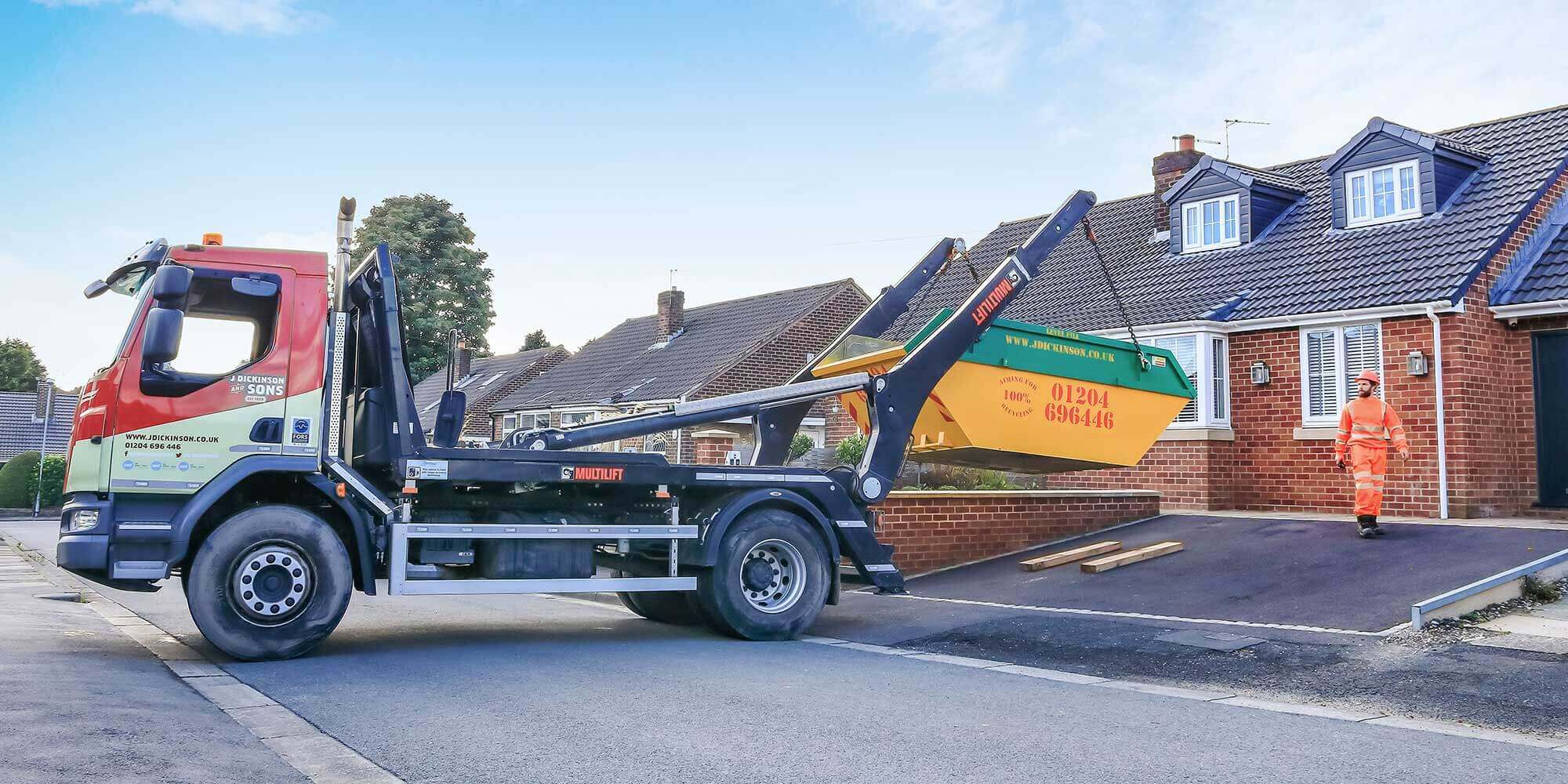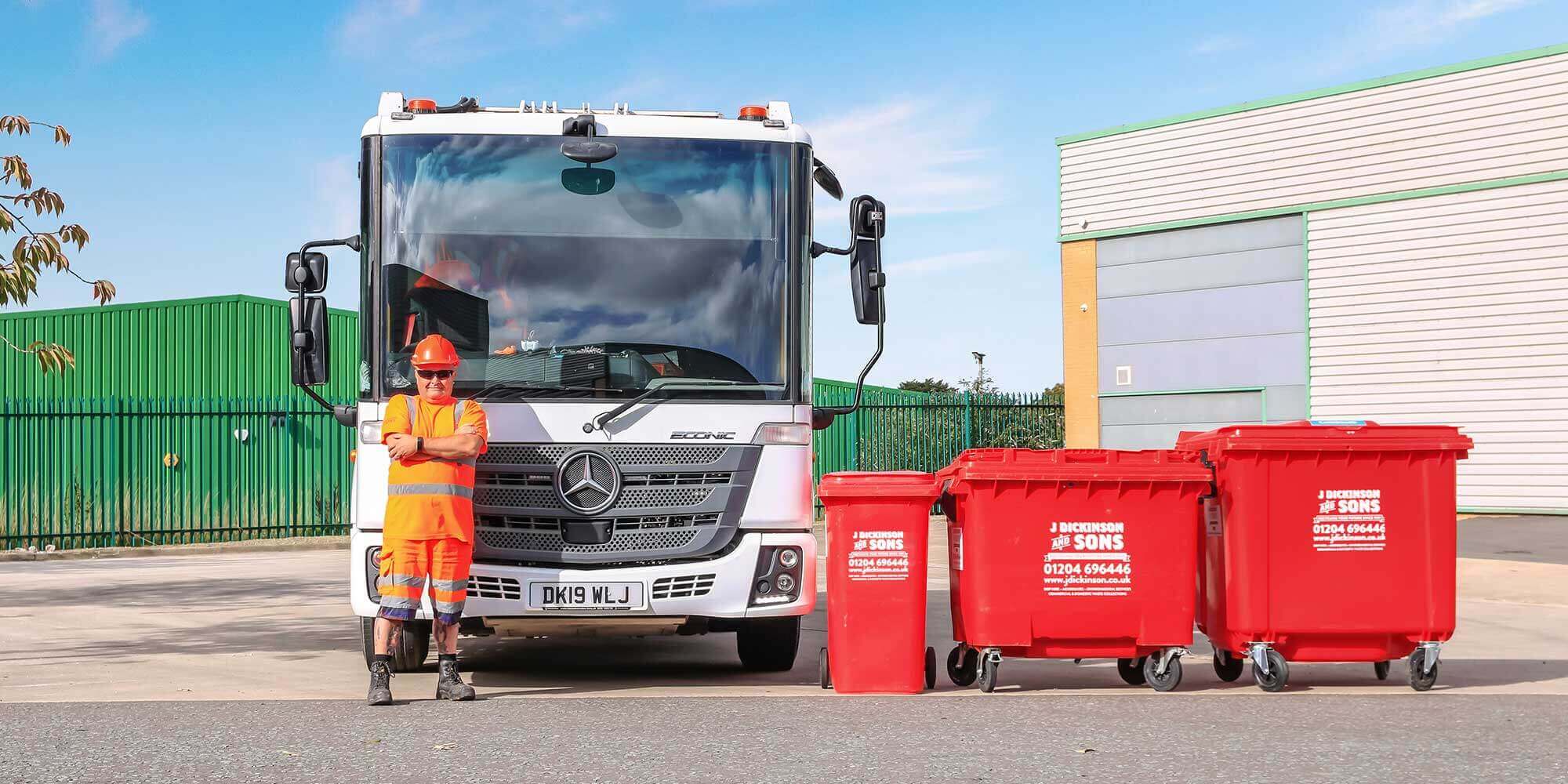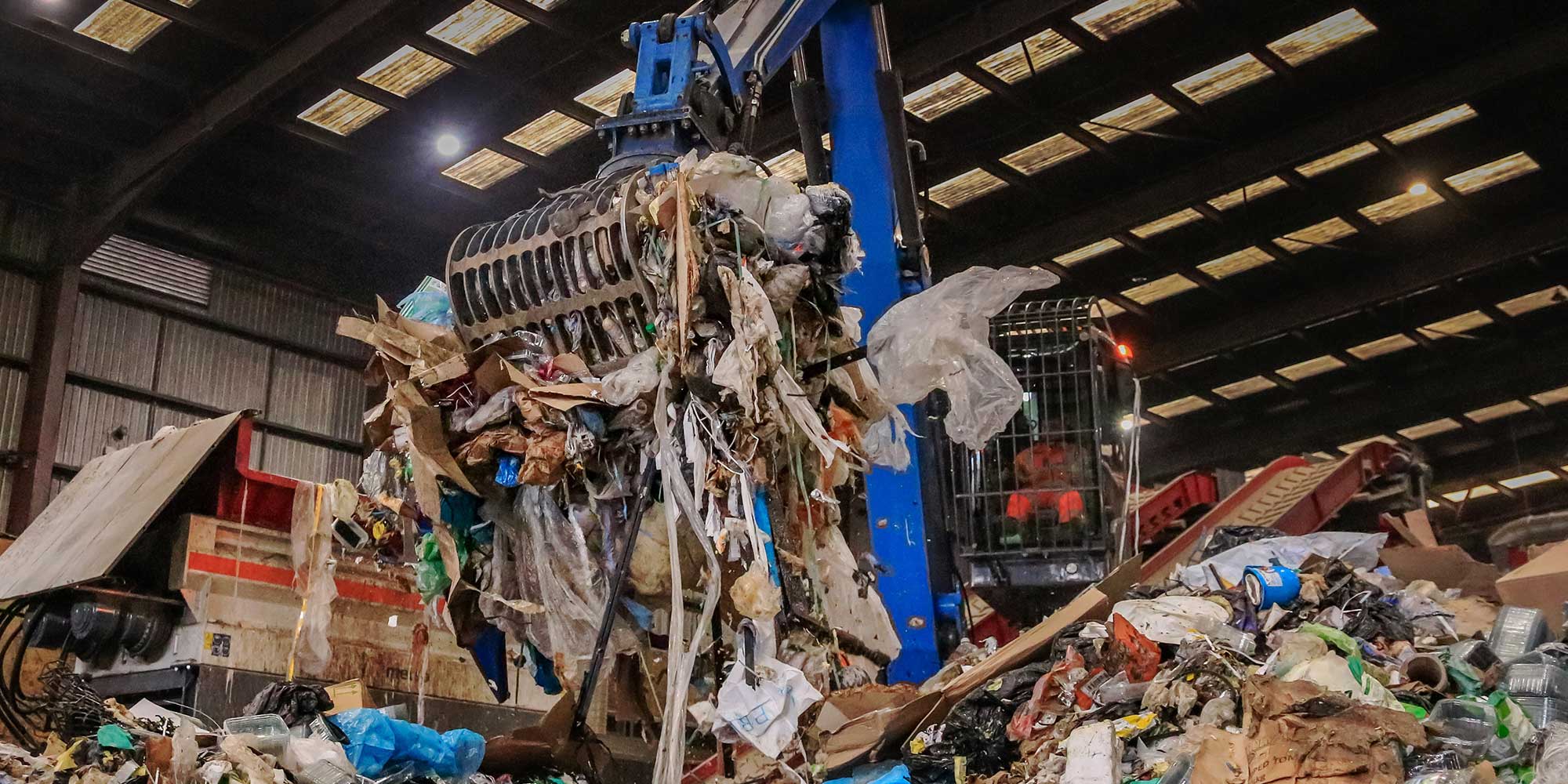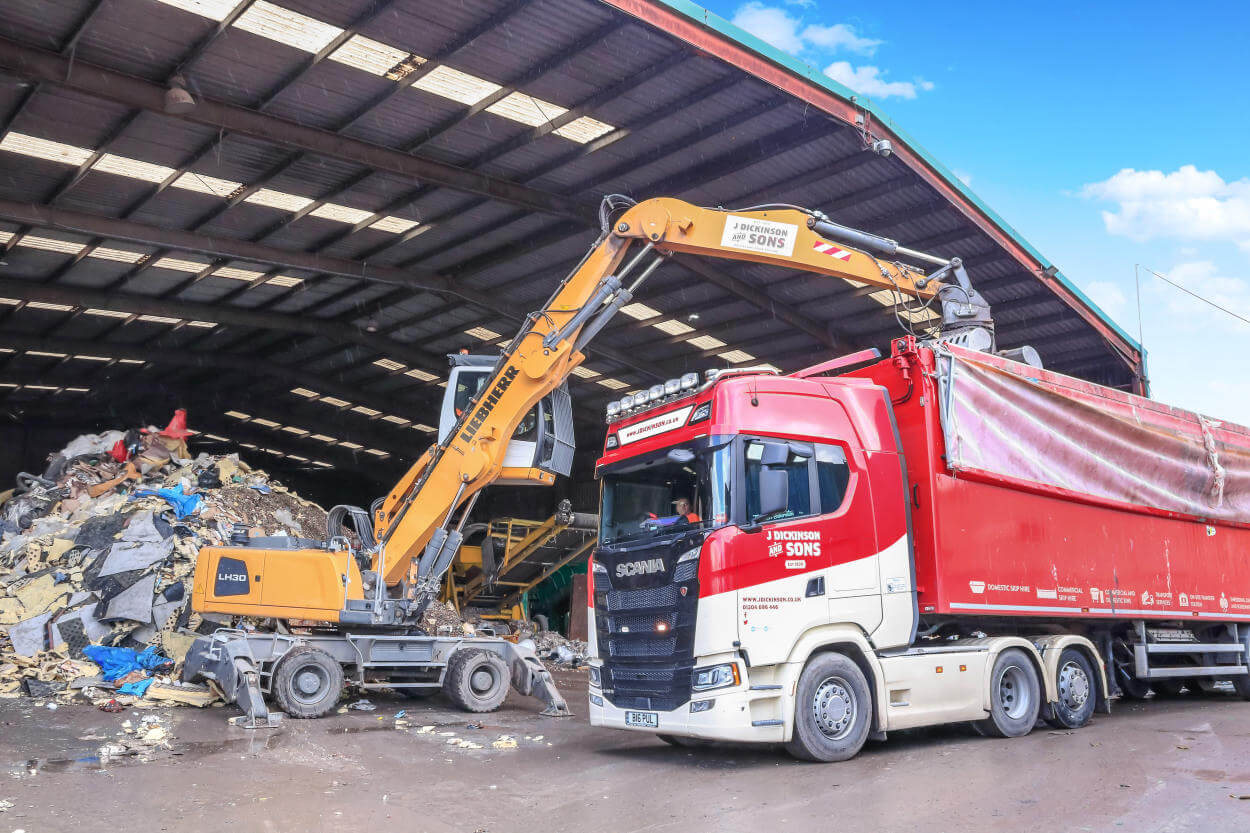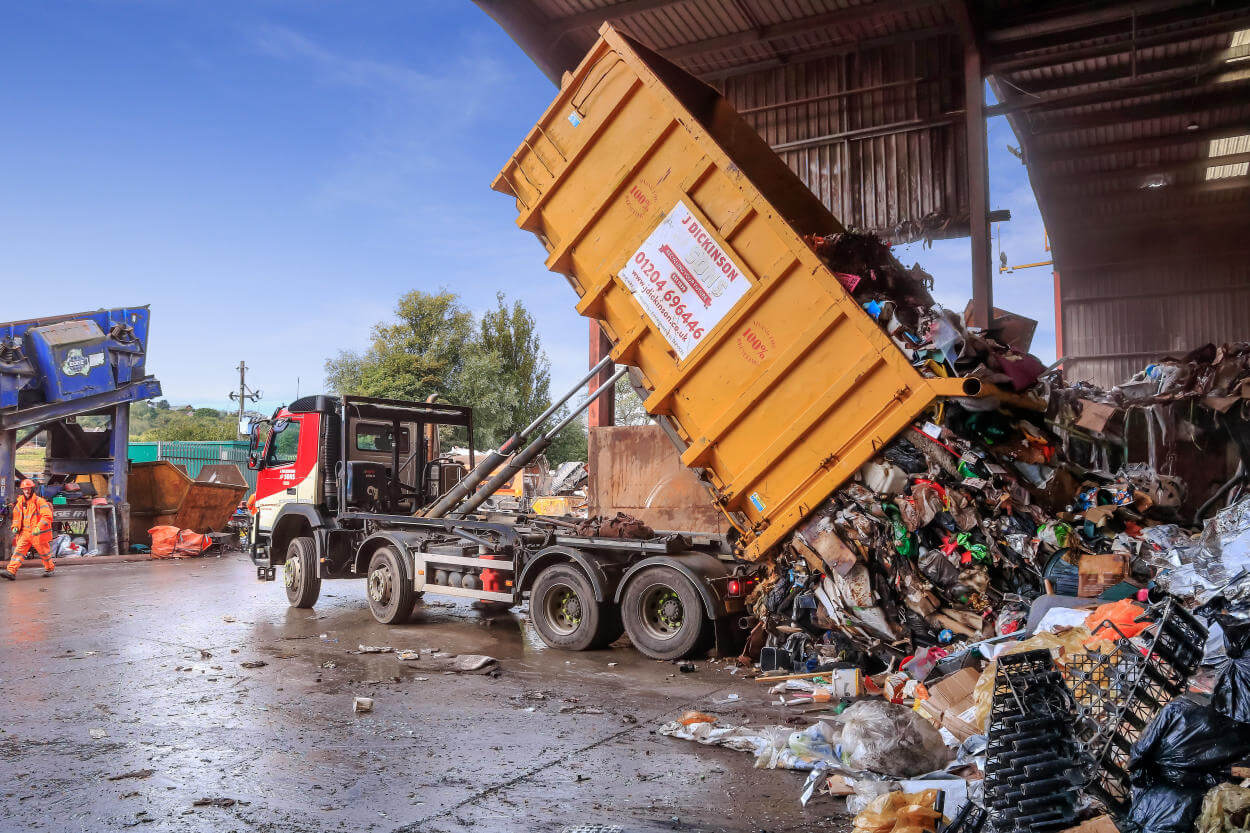

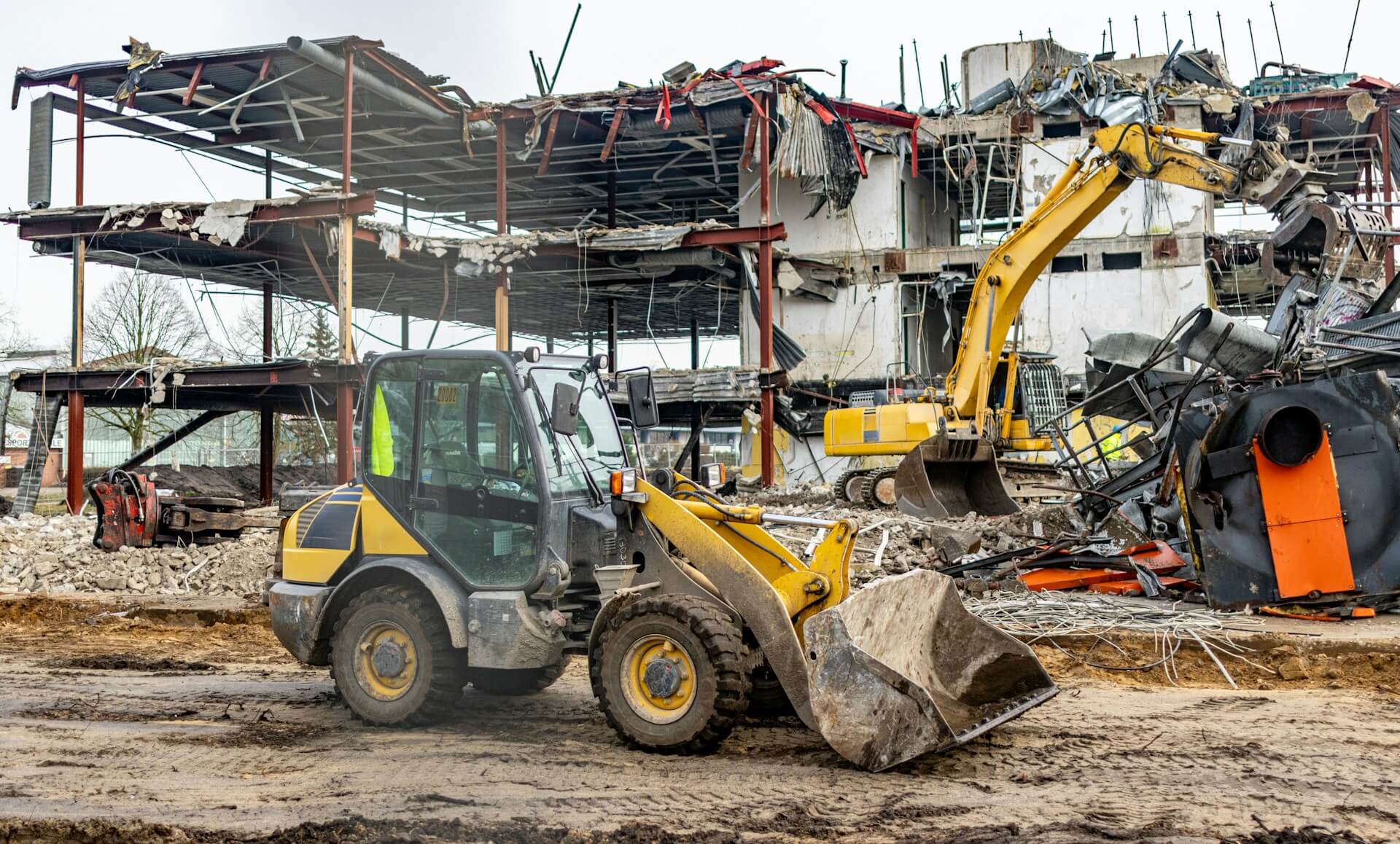
The best skip size for construction waste is usually a 4, 8 or 14-yard commercial skip, chosen on the density of the material rather than the volume, because most site loads reach a weight limit before they run out of space.
Dense material like soil, rubble and broken concrete reaches that weight limit long before it reaches the fill line, which is why a small skip half full of solid concrete can be too heavy to lift, while a much larger one packed with plasterboard offcuts counts as barely loaded.
This guide covers skip sizes for construction waste and site clearance rather than household clear-outs: which skip suits which materials, what common construction waste weighs, and why a skip that looks half empty can already be too heavy to collect.
Jump to:
- What size skip do I need for construction waste?
- What can’t go in a construction skip?
- Why does heavy waste need a smaller skip?
- How much does construction waste weigh?
- What paperwork do you need for construction waste?
- Book your commercial skip with J Dickinson & Sons today
- Construction waste skip size: Frequently asked questions
What size skip do I need for construction waste?
Most construction waste suits a commercial skip between 4 and 14 yards, with 20 or 40-yard RoRo skips for long-term use. Which one you need depends on the density of the material rather than the size of the pile.
4-yard skips are best for heavy waste
When removing site waste, 4-yard skips are best for:
- Soil/subsoil
- Clay
- Hardcore
- Broken concrete
- Bricks
- Blocks
- Roof tiles
- Paving slabs
- Mortar
A 4-yard skip will hold a decent amount of these materials without reaching a weight limit that a delivery lorry can’t handle. Typical uses are for digging out foundations, breaking up a driveway/patio, or stripping a roof.
8-yard skips are best for mixed waste
The 8-yard skip (or builder’s skip) is the default site skip and suits a general refurbishment or strip-out where there is a variety of materials, such as:
- Timber offcuts
- Floorboards
- Stud partitions
- Insulation
- Packaging
- Old kitchen/bathroom units
- Carpet
- Underlay
- General site rubbish
It will take a limited amount of rubble within a lighter load, but it isn’t a rubble skip. If more than roughly a quarter of the load is going to be brick, concrete or soil, split the job across a 4-yard skip for the heavy material and a larger skip for the rest.
14-yard skips are best for high volumes of light material
14-yard skips should be used for bulky, light fit-out/refurbishment waste, including:
- Insulation board
- Timber
- Packaging
- Cardboard
- Plastic sheeting
- Ductwork
- Ceiling tiles
- Stud framing
With this size you’re paying for space rather than tonnage, so weight is rarely the limiting factor – access is. A 14-yard skip needs room to stand, plus space for the lorry to reverse in and tip the skip off the back. Check the drop point before booking, and let us know if the approach is narrow or the ground is soft.
20 and 40-yard RoRo skips are best for long-term use
RoRos stay on site and are swapped out as they fill, which suits a long project rather than a single clearance. The 40-yard RoRo skip is for light, bulky waste, like timber, packaging, insulation and plasterboard. The 20-yard RoRo is more versatile and can take heavier loads, though the limit depends on the container and the vehicle, so confirm before booking if your waste is mainly rubble, soil or concrete.
Not sure which commercial skip size fits your job? Let us know the materials you’re working with and the rough quantities, and we’ll confirm the size and its weight limit. Free delivery and collection, and no hidden charges bolted on at the end. Call 01204 696446 or get your free quote when you book online.
What can’t go in a construction skip?

Hazardous and specialist materials can’t go in a construction skip – asbestos, gas cylinders, chemicals, tyres, batteries and electrical items – and plasterboard has to be kept out of mixed loads. Sorting these before delivery is far easier than at collection:
- Asbestos in any form, including cement sheeting, insulation board, textured coatings and pipe lagging
- Gas cylinders and pressurised containers, including empty ones
- Paint, solvents, adhesives and sealants, whether liquid or part-set
- Oils, fuels and other liquids
- Tyres
- Batteries, including tool and vehicle batteries
- Electrical items and WEEE, such as old fittings, distribution boards and appliances
- Fluorescent tubes and lamps
- Plasterboard, which isn’t hazardous but has to be kept out of general mixed loads
If any of these come out of the job, tell us and we’ll arrange the right route for them. Finding them at collection means the load doesn’t go anywhere until they’ve been removed, which costs you a day and usually a return journey.
Why does heavy waste need a smaller skip?
Heavy waste needs a smaller skip because you are limited by how much the lorry can safely lift, not the space in the container. At a certain point, a bigger skip gives you space you’d just have to leave empty.
For example, two 4-yard skips filled with brick and concrete will usually be collected without issue, but one 8-yard skip filled to the top with the same material will not.
How much does construction waste weigh?
Construction waste ranges from around 30 kg per cubic metre for insulation and packaging to well over a tonne for rubble, soil and concrete. The figures below are industry-standard approximations for loose, as-loaded material. Wet material is heavier, sometimes substantially so.
| Material | Approx. weight per cubic metre |
|---|---|
| Insulation, packaging, polystyrene | 30–80 kg |
| Mixed fit-out and strip-out waste | 150–250 kg |
| Timber, joinery, loose offcuts | 200–300 kg |
| Plasterboard offcuts | 400–600 kg |
| Mixed general building waste | 400–700 kg |
| Roof tiles and slate, loose | 1,200–1,600 kg |
| Topsoil, dry and loose | 1,300–1,500 kg |
| Sand, gravel and MOT subbase | 1,500–1,700 kg |
| Brick rubble, broken | 1,500–1,800 kg |
| Wet or clay soil | 1,700–2,000 kg |
| Broken concrete and hardcore | 1,800–2,400 kg |
What paperwork do you need for construction waste?
You need a waste transfer note for every load of non-hazardous waste that leaves your site, and both you and the waste carrier have to keep a copy. Under GOV.UK guidance, each load moved off your premises needs a waste transfer note or a document carrying the same information, such as an invoice.
Both businesses complete the sections that apply to them, keep a paper or electronic copy for two years, and produce it for an enforcement officer from the local council or the Environment Agency if asked.
If you’re running regular collections on the same site, a season ticket (sometimes called an annual waste transfer note) can cover multiple transfers of non-hazardous waste for up to a year, provided the details stay the same. On a long programme with repeated exchanges, that’s usually simpler than a note per load.
We handle the documentation as part of the service, so you’re not chasing paperwork after your skip hire period is over. If you need waste transfer notes issued in a particular format for your own reporting, tell us when you book, and we’ll set it up from the first collection.
Where does your waste go?

Everything we collect goes to our own 17-acre recycling site rather than being passed to a third party, where it’s sorted and processed with the aim of sending nothing to landfill. Because the facility is ours and it’s ISO14001 accredited, we can tell you what happened to your load rather than pointing you further down the chain.
Book your commercial skip with J Dickinson & Sons today
Booking your commercial skip takes a phone call or a couple of minutes online, and getting the size right first time saves a wasted journey, a refused collection and a day lost on the programme. We’ve been providing cost-effective, reliable waste management across Greater Manchester since 1939, so if you’re unsure, just tell us what you’re clearing and roughly how much of it there is and we’ll let you know.
Delivery and collection are free, the price we quote is the price you pay, and everything we take away goes to our own 17-acre recycling site rather than down the chain to someone else. Call us on 01204 696446 or book your skip online now to see if next-day delivery is available.
Construction waste skip size: Frequently asked questions
What size skip do I need for rubble?
A 4-yard skip is usually the right size for rubble, loaded below the fill line. Rubble weighs roughly 1,500 to 1,800 kg per cubic metre, so a container that looks half empty can already be at its weight limit. For larger volumes, two smaller skips or bulk haulage works better than one oversized container.
What is the difference between a skip and a RoRo?
A skip is a smaller container of up to around 14 cubic yards, lifted onto a standard skip wagon, while a RoRo is a 20 or 40 cubic yard container winched onto a specialist vehicle. RoRos stay on site and are exchanged as they fill, which suits sustained construction output.
What happens if a skip is overloaded?
An overloaded skip cannot be legally or safely transported, so it will not be collected. You will need to remove the excess material or have the load reduced, which delays collection and can hold up the programme. Loading to the fill line, and lower for heavy waste, avoids this.
Can different waste types go in the same skip?
Different waste types can go in the same skip, but the load is then classed as general waste and costs more to process. Keeping inert and green waste in separate containers is almost always cheaper, because both are simpler to recycle. A single bag of general rubbish can reclassify an entire inert load.
How much can you put in a skip by weight?
There’s no single figure about how much you can put in a skip by weight because it changes by size. As a working rule, fill light waste to the line and heavy waste (e.g. rubble, stone, concrete) to roughly half that depth.
Share this