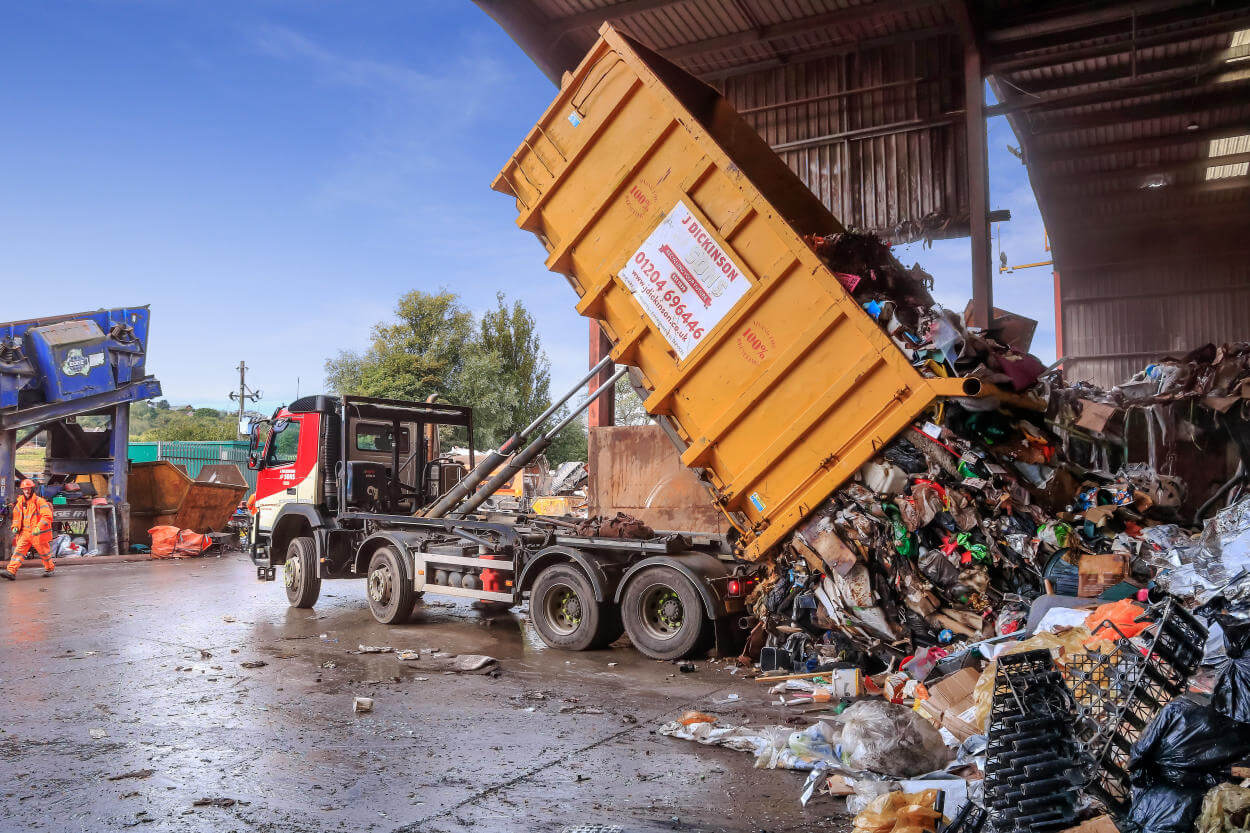

Construction waste classification means identifying each type of waste your site produces, giving it the correct six-digit List of Waste code and deciding whether it’s inert, non-hazardous or hazardous. That decision controls which container it can go in, who can carry it, where it can be taken and how much it costs.
Classify your site waste before you book a skip and you’ll pay less to get rid of it and avoid rejected or overweight loads. It’s also a major part of your legal duty of care as a waste producer.
In this guide, we explain how List of Waste codes work, which category your waste falls into, how that affects your Landfill Tax bill and what to do before you book a skip.
Jump to:
- What counts as construction and demolition waste?
- How is construction waste classified?
- The three categories of construction waste
- Common construction waste codes
- Construction waste vs general skip waste
- How classification affects your quote
- Your legal duties as a waste producer
- How to classify your site waste
What counts as construction and demolition waste?
Construction and demolition waste is any waste produced by building, refurbishing, altering or demolishing a structure, along with the soil and stones dug out during groundworks. If it leaves site as a result of the works, it almost certainly falls into this group.
Typical construction and demolition waste includes:
- Hard materials: Bricks, concrete, tiles, blocks and ceramics
- Excavated material: Soil, stones, clay and hardcore
- Timber: Offcuts, pallets, formwork and stripped-out joinery
- Metals: Steel, copper pipe, cable and aluminium
- Gypsum-based waste: Plasterboard and plaster
- Packaging and site clearance waste: Plastics, cardboard, glass and wrapping
- Hazardous materials: Asbestos, contaminated soil, coal tar, solvent-based paints and adhesives
Construction waste is one of the biggest waste streams in the UK. Defra figures show the UK produced 59.4 million tonnes of non-hazardous construction and demolition waste in 2020, and construction, demolition and excavation together account for around three-fifths of all UK waste.
How is construction waste classified?
Construction waste is classified using the List of Waste (LoW), often still called EWC codes. Most building site waste sits in Chapter 17 of the list, and every load needs the code that best describes it.
Each code is six digits. The first two show the chapter, the middle two show the sub-chapter and the last two identify the specific material. For example, 17 01 01 is concrete, and 17 05 04 is clean soil and stones.
Codes come in two types:
- Absolute entries: Always hazardous or always non-hazardous, whatever the concentration. Asbestos-containing construction material (17 06 05*) is always hazardous.
- Mirror entries: Pairs of codes where one is hazardous and one isn’t. Soil is a good example – it’s either 17 05 04 (non-hazardous) or 17 05 03* (hazardous), depending on what it contains.
An asterisk (*) after a code means the waste is hazardous. The full process for assessing mirror entries is set out in the Environment Agency’s technical guidance, known as WM3.
What are the three categories of construction waste?
Construction waste falls into three broad categories: inert, non-hazardous and hazardous. Which category each waste stream belongs to is the single biggest factor in what you’ll pay to dispose of it.
Inert waste
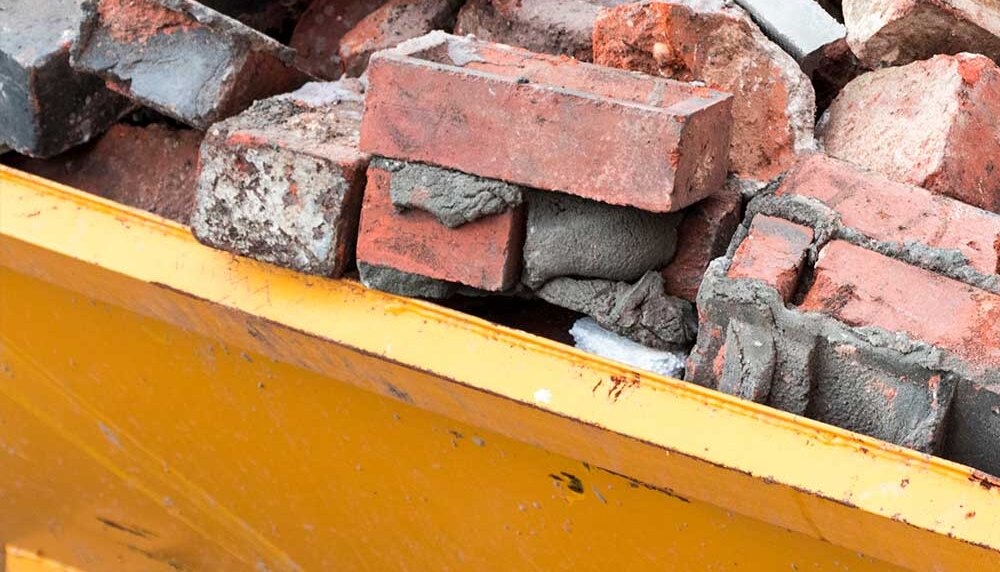
Inert waste doesn’t break down, react or pollute in any meaningful way. Clean concrete, bricks, tiles, stone and uncontaminated soil are the most common examples. It’s heavy, but it’s also the cheapest waste to dispose of – as long as it stays clean.
Non-hazardous waste
Non-hazardous waste covers most other building materials, including untreated timber, metals, plastics, packaging and plasterboard. Much of it can be recycled or recovered, but it costs more to process than inert waste. Keep it out of your inert skips, or a load of clean rubble could end up taxed at the higher rate.
Hazardous waste
Hazardous waste has properties that could harm people or the environment. On building sites, that usually means:
- Asbestos
- Soil contaminated with oils or chemicals
- Coal tar in old road surfaces
- Solvent-based paints
- Oily rags
- Timber treated with creosote or other hazardous preservatives
- Fluorescent tubes
It needs separate containers, specialist handling and extra paperwork. If you suspect any of these on site, call before you book so we can organise specialist disposal.
What are the common construction waste codes?
The List of Waste (EWC) codes below cover the waste most building sites produce. For anything not listed, check the full list on legislation.gov.uk.
| Waste | Typical code | Category |
|---|---|---|
| Concrete | 17 01 01 | Inert |
| Bricks | 17 01 02 | Inert |
| Mixed concrete, bricks and tiles | 17 01 07 | Inert |
| Clean soil and stones | 17 05 04 | Inert / non-hazardous |
| Wood | 17 02 01 | Non-hazardous |
| Iron and steel | 17 04 05 | Non-hazardous |
| Plasterboard (gypsum-based) | 17 08 02 | Non-hazardous – must be kept separate |
| Mixed construction and demolition waste | 17 09 04 | Non-hazardous |
| Contaminated soil | 17 05 03* | Hazardous |
| Bituminous mixtures containing coal tar (often found in old tarmac) | 17 03 01* | Hazardous |
| Construction materials containing asbestos | 17 06 05* | Hazardous |
Not sure what your waste load is? Call our team before you book your skip, and we’ll match you with the right one for the best price.
How is construction waste different from general skip waste?
Construction waste differs from general skip waste in its weight, its codes and the rules on what can be mixed. A household clear-out is mostly light, bulky material, while construction waste is often dense, contains regulated materials and comes with stricter duty of care obligations for the business producing it.
- Weight limits matter more: Clay, soil, brick, concrete and tarmac can push a skip over its legal road weight long before it looks full, so you may need to stop short of the rim with dense loads.
- Some materials can’t share a skip: Plasterboard must be kept apart from general waste, and hazardous items can never go into a general load. Mixing them in contaminates everything else in the skip and can stop it from being recycled.
- Your skip type depends on it: When you book a skip with us, you’ll choose General, Green or Inert waste. Picking the right type up front gets you an accurate price and avoids problems at collection.
- You carry more responsibility: Builders and contractors carry more legal responsibility than domestic customers for describing waste correctly.
Why does waste classification affect your final quote?
Waste classification affects what you pay because disposal costs follow the category of waste. The biggest factor is Landfill Tax, which has two very different rates.
Since 1 April 2026, the standard rate of Landfill Tax is £130.75 per tonne and the lower rate for qualifying inert material is £8.65 per tonne. If there’s any doubt that a load qualifies for the lower rate, the standard rate applies.
On a five-tonne load, that’s the difference between around £43 and £654 in tax alone. Mixing plasterboard offcuts or general rubbish into a skip of clean rubble can put the whole load at risk of the standard rate.
Even when waste is recycled, which is our aim for everything we collect, mixed loads take more sorting and handling than clean, single-material loads. Separating waste on site is the simplest way to keep your costs down.
Not sure which category your waste falls into? Call our team on 01204 696446 before you book, and we’ll help you choose the right skip for the job.
What are your legal duties as a waste producer?
As a waste producer, you have a legal duty of care to classify, store and transfer your waste safely and to make sure it only goes to someone authorised to take it. This applies to every business, from sole traders to main contractors.
Your main legal duties are to:
- Describe your waste accurately, including its List of Waste code.
- Store it securely so it can’t escape or be contaminated.
- Check your carrier is registered with the Environment Agency.
- Complete a waste transfer note for non-hazardous waste and keep it for at least two years.
- Use a consignment note for hazardous waste and keep it for at least three years.
Getting it wrong can lead to fines, even if a carrier you hired is the one who dumps the waste. The full requirements are set out in the waste duty of care code of practice.
Record-keeping is also going digital. Since 1 October 2026, permitted waste receiving sites in England and Wales must record the waste they receive through the government’s digital waste tracking service.
Most waste producers don’t have to upload records themselves yet, and your existing paperwork, including waste transfer notes and consignment notes, still applies. Accurate descriptions and codes from site will feed straight into the new system.
How to classify your site waste before you book a skip
You can classify your site waste in five steps, ideally before work starts, so you can plan containers from day one.
- List every waste stream: Note everything you’ll remove as part of the job – rubble, soil, timber, plasterboard, metals, packaging and anything that might be hazardous.
- Match each stream to a Chapter 17 code: Use the table above to find the closest match.
- Check for hazardous materials: On older buildings, get an asbestos survey before demolition or refurbishment. Test soil if the site has any history of industrial use or fuel storage.
- Plan separation on site: Keep inert, plasterboard and hazardous waste apart from general waste, using separate containers or clearly marked areas.
- Book the right container for each stream: Tell us exactly what’s going in your skip. An accurate description means no surprise costs at collection.
Remove your construction waste easily with J Dickinson & Sons
J Dickinson & Sons makes removing your construction waste simple, from booking the right skip to recycling what’s inside it.
When booking your skip, simply choose the type of waste you’re removing, pick the best size for your needs and choose your delivery date.
Every waste load we collect comes back to our 17-acre recycling facility near Horwich, where we sort everything we can for recycling and responsible disposal.
Got hazardous waste, like asbestos or paint? Call us before booking your skip, and we’ll organise the best disposal route for it.
Construction waste classification FAQs
These answers cover the questions we’re asked most often about classifying construction waste and choosing the right skip for it.
Is plasterboard classed as hazardous waste?
Clean plasterboard is non-hazardous waste, classed under List of Waste code 17 08 02. It must still be kept separate from general and biodegradable waste, because gypsum can release hydrogen sulphide gas when it breaks down alongside them. Plasterboard contaminated with hazardous substances is coded 17 08 01* and treated as hazardous waste.
Is soil classed as inert waste?
Uncontaminated soil and stones (17 05 04) are usually treated as inert and can qualify for the lower rate of Landfill Tax. Soil containing oils, fuel, heavy metals, asbestos or other hazardous substances is coded 17 05 03* and must be handled as hazardous waste, which costs considerably more to dispose of.
Is concrete classed as inert waste?
Clean concrete is inert waste, coded 17 01 01, while mixed concrete, bricks and tiles fall under code 17 01 07. Both can qualify for the lower rate of Landfill Tax if they’re free from contamination. Concrete mixed with plasterboard, timber or general waste loses its inert status and costs more to dispose of.
Can you put mixed construction waste in one skip?
Non-hazardous construction and demolition waste can go in a single skip as a mixed load, coded 17 09 04. Mixed loads usually cost more to process than separated ones. Plasterboard should be kept apart, and hazardous waste such as asbestos, solvent-based paint or contaminated soil must never be mixed in.
Do I need a waste transfer note for a skip?
Businesses need a waste transfer note for every load of non-hazardous waste they hand over, including skip collections. The note describes the waste and its List of Waste code, and both you and your waste contractor must keep a copy for at least two years. Hazardous waste needs a consignment note instead, kept for three years.
Share this