
Want to cut waste, save money, and stay ahead of changing waste regulations? Then it’s time to start talking about the circular economy, something that’s shaping how the UK tackles waste and climate change. With net-zero deadlines shifting closer by the day, understanding the circular economy is becoming more important for businesses, councils, and homes alike. In this guide, you’ll discover exactly what the circular economy is, how it connects to waste management, and why it matters.
Key Takeaways
- What is a circular economy?
- What’s the relationship between a circular economy and waste management?
- What are the circular economy laws and regulations in the UK?
- Circular economy and waste facts & statistics
- Make circular waste management work for you
- Circular economy FAQs
What is a circular economy?
A circular economy is a model of production and consumption that aims to eliminate waste, keep resources in use for as long as possible, and regenerate natural systems. Unlike the traditional linear economy, which follows a “take, make, dispose” model, the circular economy is designed to be sustainable from the start. It involves:
- Designing out waste and pollution
- Keeping products and materials in use
- Regenerating natural systems
Instead of throwing items away, the circular economy encourages:
- Reusing and repairing products
- Recycling materials back into the supply chain
- Designing goods to last longer or be easily disassembled
- Sharing or leasing items rather than owning them
This approach applies to everything from packaging and electronics to food waste and building materials.
What’s the relationship between a circular economy and waste management?
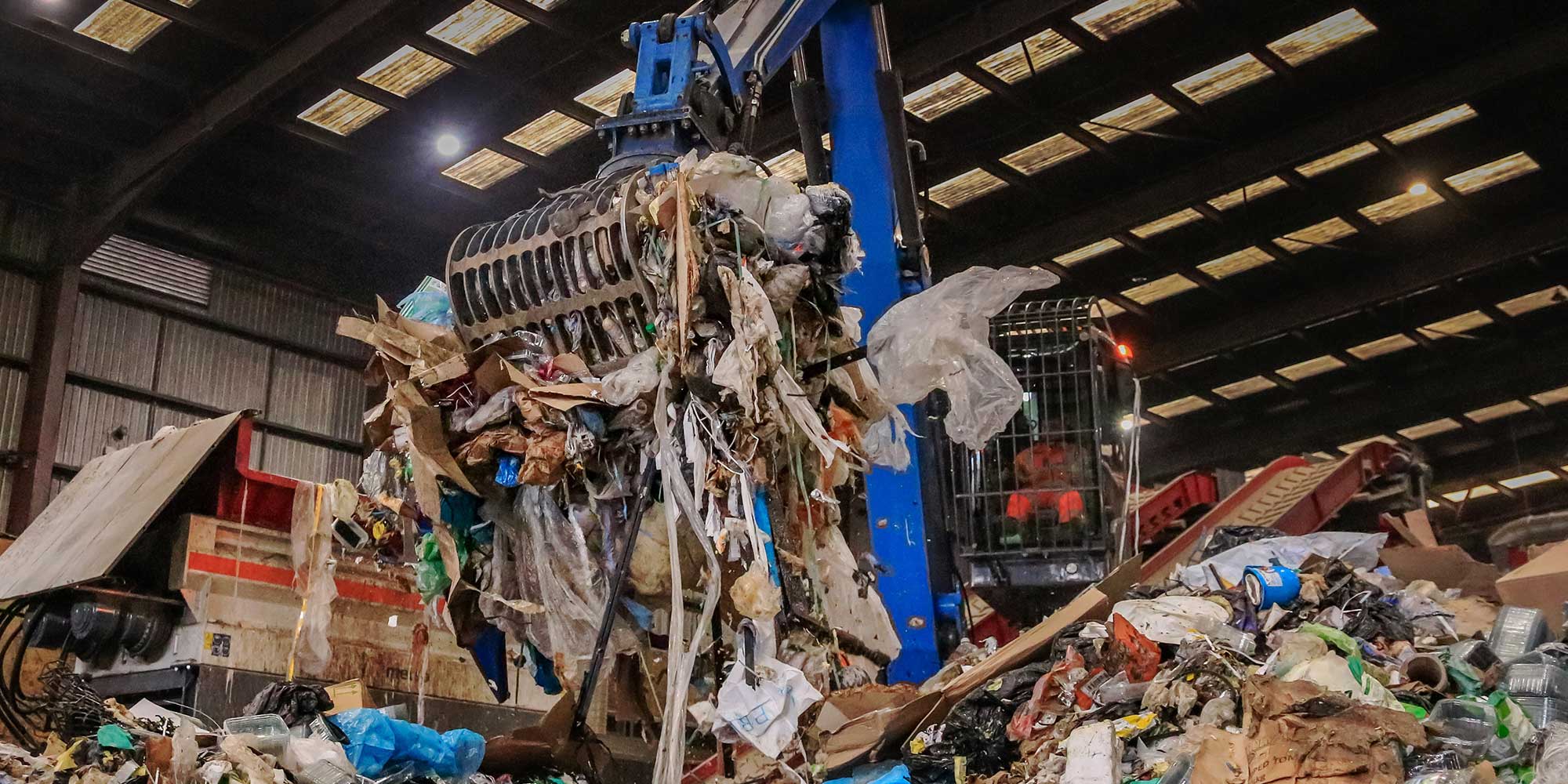
In a circular system, the goal is to prevent waste in the first place, but when waste does occur, it should be collected, sorted, and processed in ways that keep materials in use.
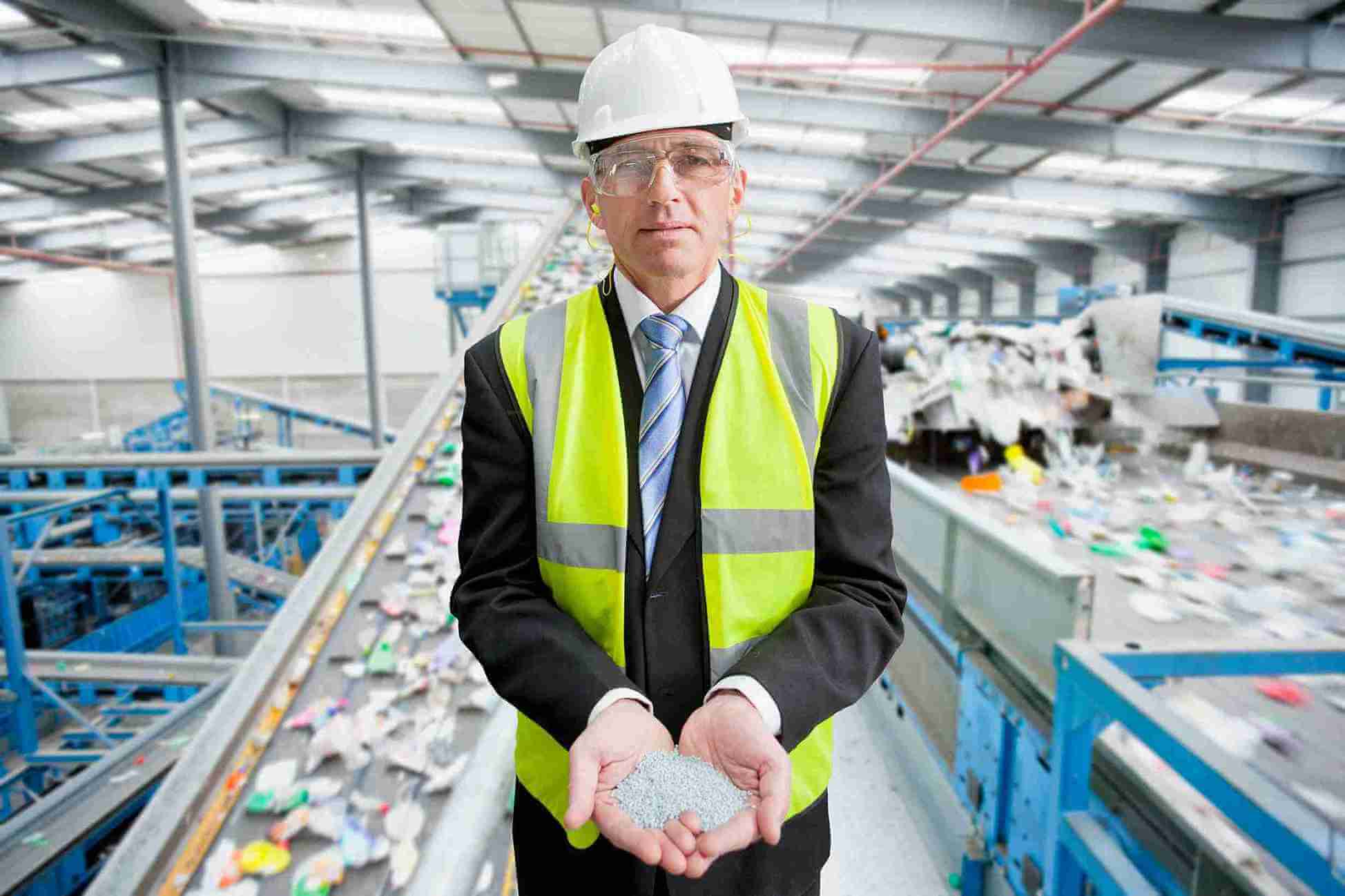
- Recycling: Turning glass, plastic, metal, and paper back into raw materials for new products
- Composting: Converting food and garden waste into nutrient-rich soil
- Re-use: Encouraging repair and secondhand use of goods
- Material recovery: Getting back valuable components from appliances or construction waste
The circular economy depends on good waste management because it treats waste as a resource. Instead of incineration and landfill, waste keeps its material value and can be recovered.
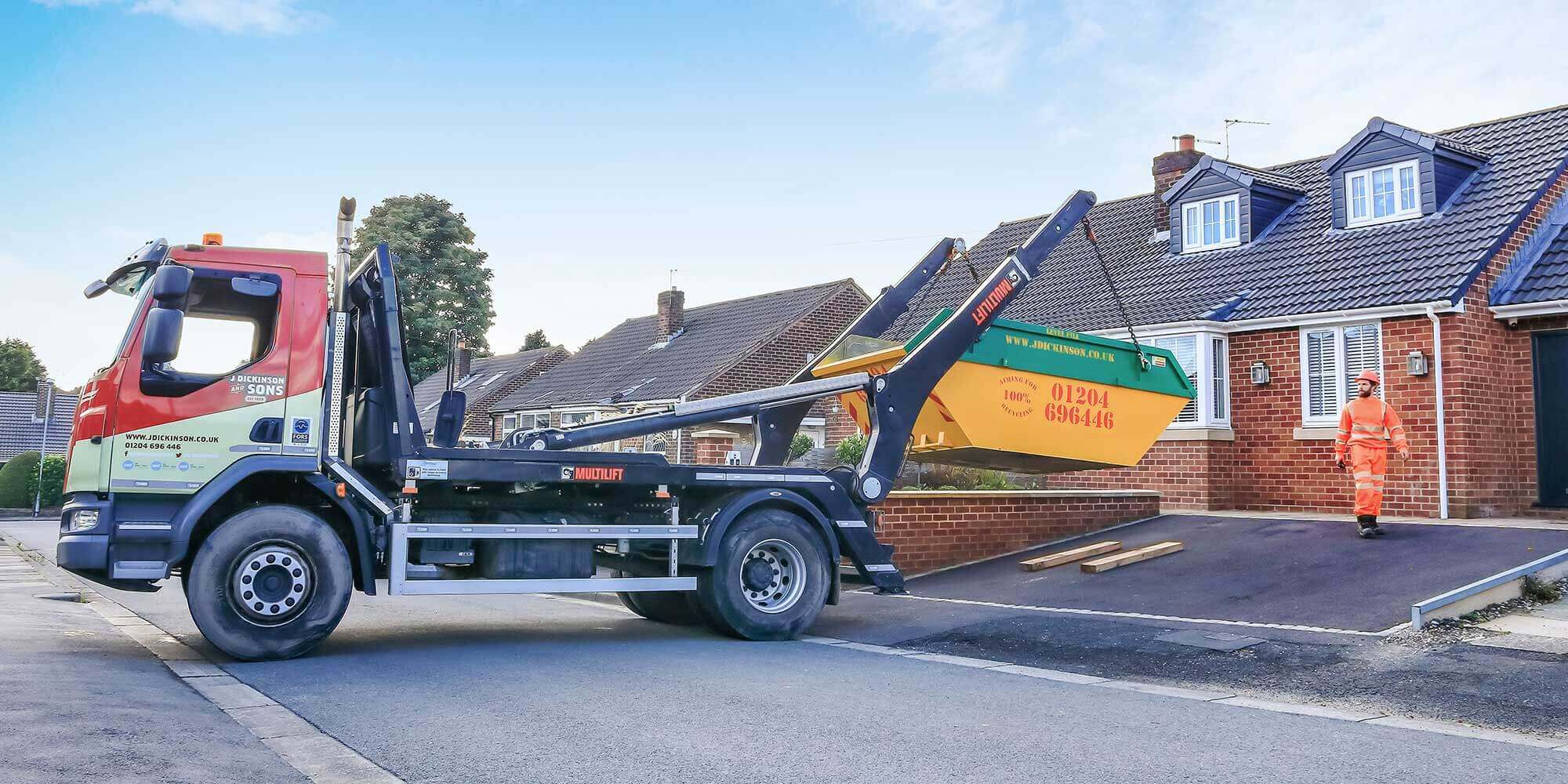
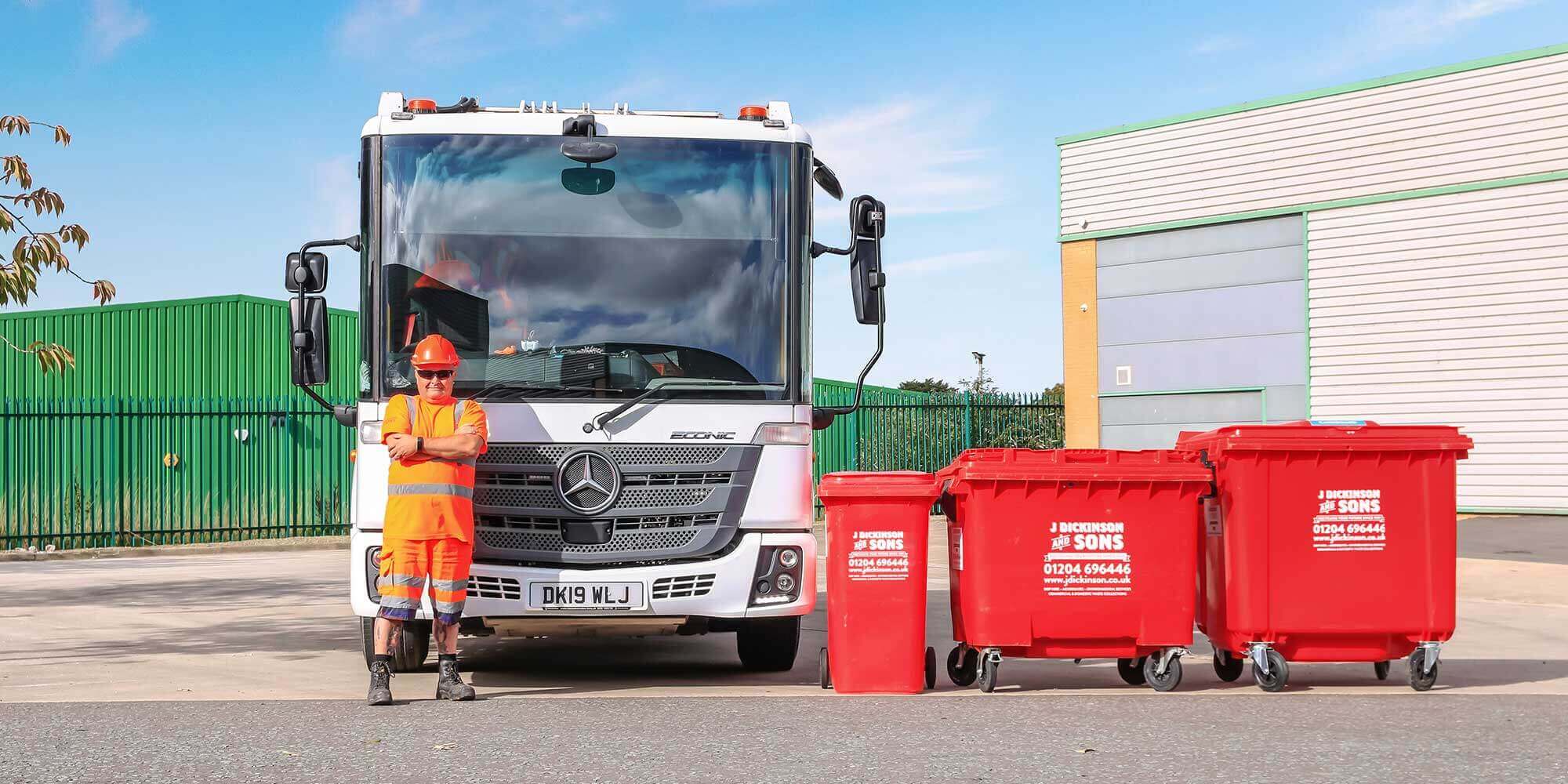
Need a hand with your waste? We make it easy to do the right thing with simple, reliable skip hire and commercial waste disposal. Get your free online quote now!
What are the circular economy laws and regulations in the UK?
As of 2025, the UK has introduced a range of regulations aimed at implementing circular economy practices, including:
- Environment Act 2021: Sets the legal framework for waste reduction, extended producer responsibility, and consistent recycling collections across England.
- Plastic Packaging Tax (2022): Applies to plastic packaging that doesn’t contain at least 30% recycled plastic, encouraging manufacturers to use recycled content.
- Extended Producer Responsibility (EPR): Shifts the cost of packaging waste disposal from councils to the producers, incentivising sustainable packaging design.
- Deposit Return Schemes (DRS): Due to roll out in parts of the UK, DRS aims to increase recycling rates by charging a refundable deposit on bottles and cans.
- Circular Economy (Scotland) Act 2024: Introduces stronger enforcement powers for local authorities and new obligations on businesses to separate recyclable waste.
- UK Plastics Pact (via WRAP): A voluntary initiative where leading brands and retailers commit to eliminating unnecessary single-use plastics and improving recyclability.
These regulations are designed to hold producers, councils, and businesses accountable for the full lifecycle of materials, and to increase recycling, reduce landfill use, and cut emissions.
Circular economy and waste facts & statistics
To put the impact of circular economy practices in 2025 into context, here are some key statistics that show the current state of waste in the UK.
- 93.3% of non-hazardous construction waste is recovered for reuse or recycling.
- 39% of global greenhouse gas emissions could be reduced by adopting circular economy practices.
- Deposit Return Schemes are expected to boost recycling of drinks containers to over 90% where implemented.
- The circular economy could generate up to half a million jobs in the UK by 2030, especially in repair, recycling, and remanufacturing.
- Landfill use is projected to fall below 10% of total waste by 2035, in line with UK targets.
Make circular waste management work for you
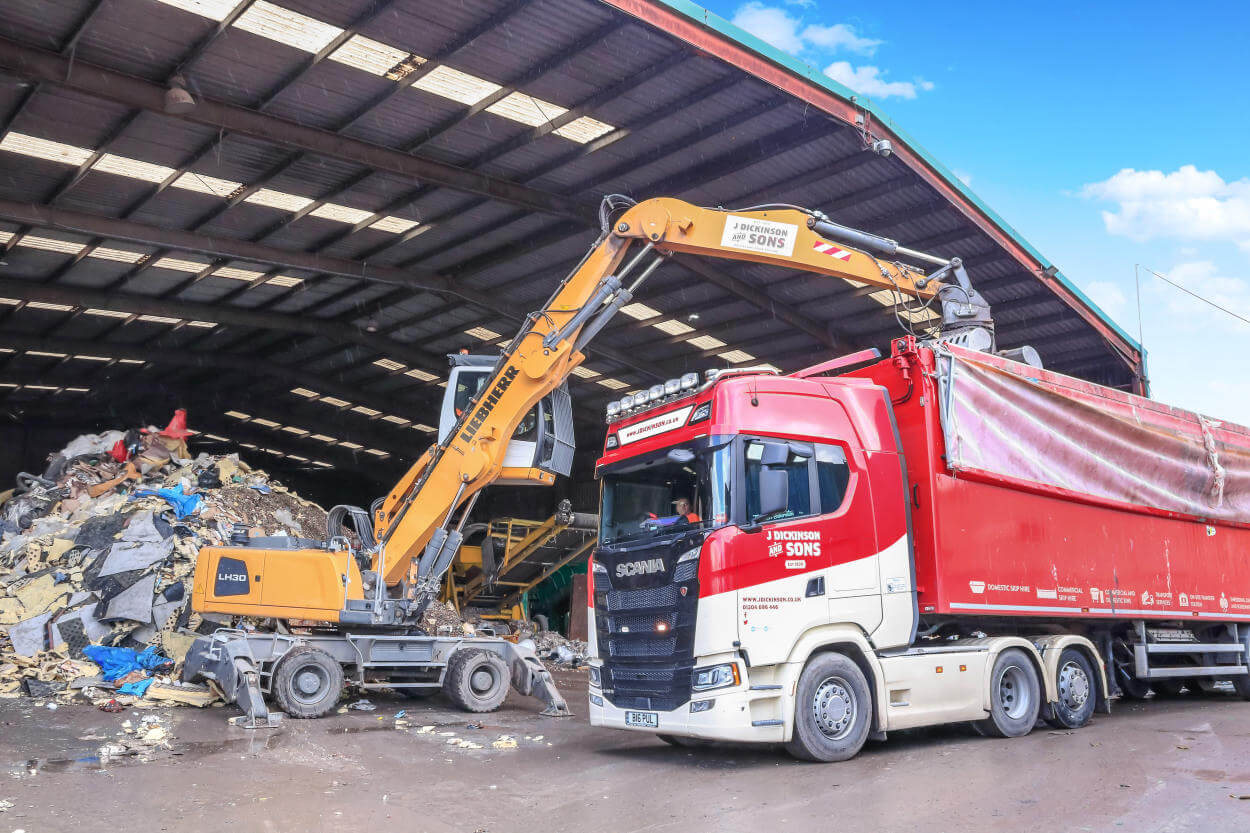
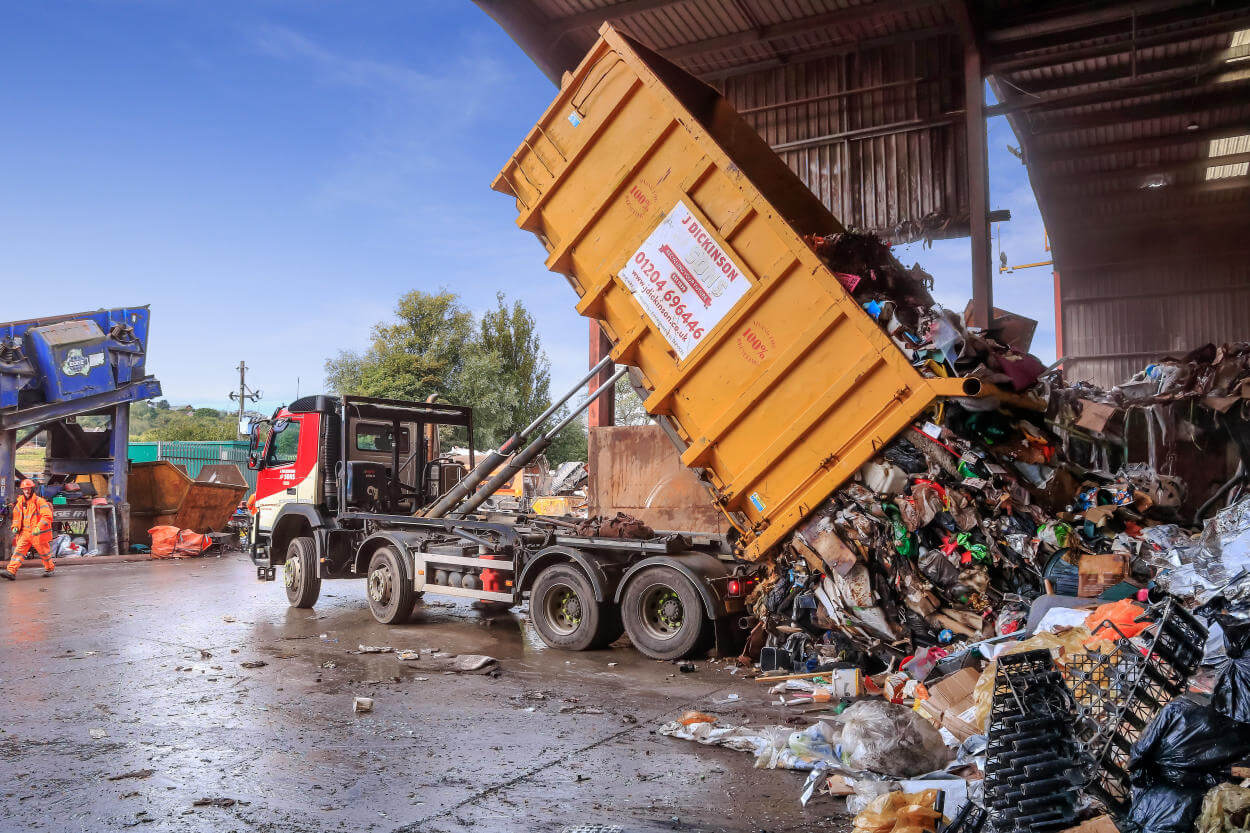
At J Dickinson & Sons, we’re a proud family-run business with over 85 years’ experience helping customers across Greater Manchester manage their waste responsibly. With our state-of-the-art 17-acre recycling facility in Horwich, we recover as much waste material as possible and reduce what ends up in landfill. If you’re looking to remove waste quickly and sustainably, we’re here to help. Call us on 01204 696446 or get your free online quote now to get started!
Circular economy FAQs
What’s the difference between a linear and circular economy?
A linear economy follows a “take, make, dispose” model where raw materials are used to create products, which are then discarded as waste after use. In contrast, a circular economy aims to keep materials in use for as long as possible through re-use, recycling, and resource recovery, minimising waste and environmental impact.
What are some circular waste management strategies?
Some key circular waste management strategies include:
- Recycling materials back into the supply chain
- Composting organic waste into nutrient-rich soil
- Re-use and repair of goods to extend their lifespan
- Material recovery from electronics, furniture, or construction waste
How does a circular economy reduce waste?
A circular economy reduces waste by designing products and systems that prioritise durability, repairability, and recyclability. Instead of discarding materials after one use, the circular approach means they are recovered, reused, or repurposed, cutting down on landfill and pollution in the process.
What is the primary goal of the circular economy concept in waste management?
The main goal of the circular economy in waste management is to retain the value of materials for as long as possible and eliminate waste at the source. It focuses on keeping products, components, and materials in use through re-use, recycling, and regeneration, supporting both environmental and economic sustainability.
Share this